CRM is a system for managing relationships with your customers. It is an information system that helps you keep track of all your leads, purchase history and communication with clients. This makes it an indispensable tool for every modern business, helping you boost sales and build stronger customer relationships. It’s not just the sales department that uses CRM data, but also their colleagues in marketing and customer care.
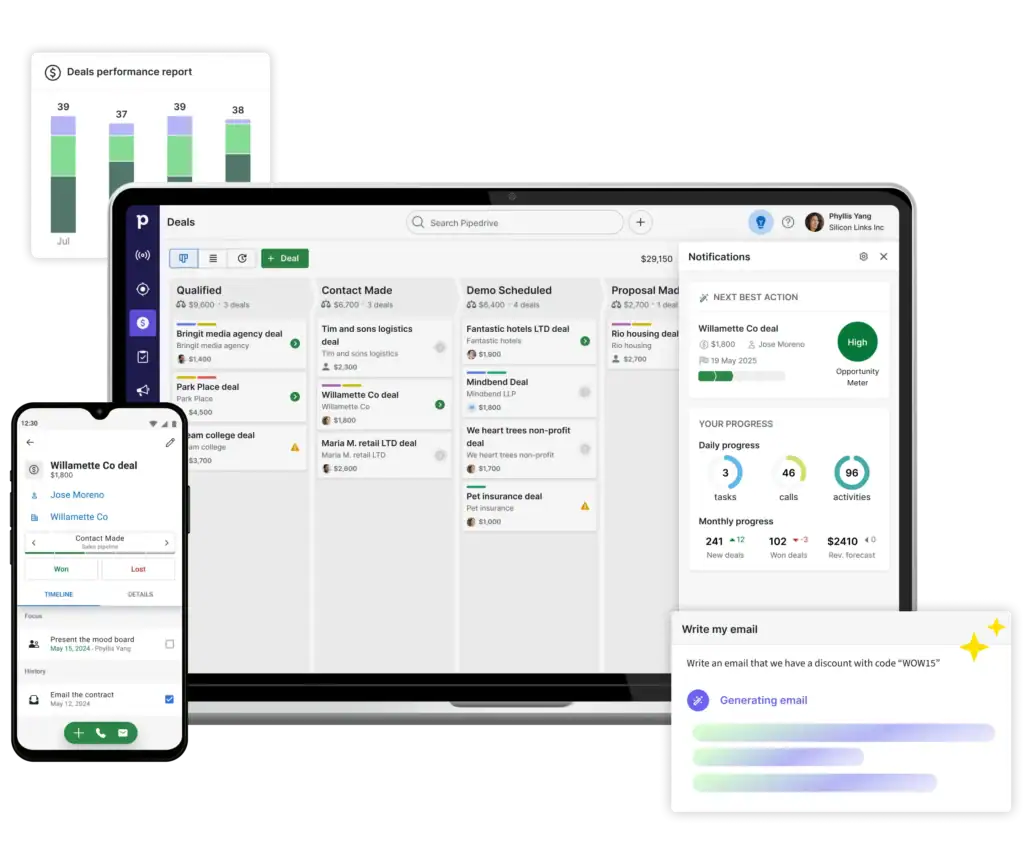
Image source: pipedrive.com
What does CRM stand for?
CRM stands for Customer Relationship Management. Although the acronym is sometimes used to describe strategy, in most cases it refers to a software solution. CRM helps you keep track of your customers, their purchase history, inquiries, communications and other important data.
How does CRM work?
Think of CRM as a smart notebook and a business coordinator packed into a single solution. The system has many features that save you time and help you stay in touch with your customers. For instance, CRM automatically tracks your communication with clients, alerts you to the next steps in the business cycle, and helps you remember important follow-ups.
Example: Did somebody fill out a contact form on your website? The CRM system automatically organises incoming items for processing, routes them to the appropriate salespeople, creates reminder notifications, and adds the client to your marketing email list
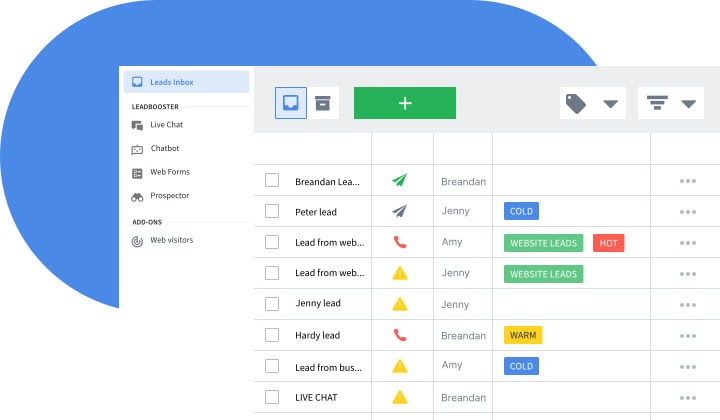
Image source: pipedrive.com
Key benefits of a CRM system
CRM makes sure that you have all the data about your existing and potential customers in one place. This brings several advantages:
- Comprehensive overview of customers, profitability, sales and demands
- Better targeting of sales and marketing activities
- Acceleration of business processes
- Improved customer care
- Higher conversion rate and profitability
Try Pipedrive –
Pipedrive is one of the most popular CRM systems on the market. It’s easy to use, flexible, and designed to save time and help you close more deals.
Try Pipedrive for 14 days for free and see how CRM can help your business grow.



Types of CRM systems
There are several types of CRM:
- Operational CRM
- Analytical CRM
- Collaborative CRM
- CRM combining previous approaches
Operational CRM
Operational CRM primarily helps sales and marketing teams to plan activities, maximise cross-selling and upselling, but also improve collaboration and increase sales, ROI, and overall customer satisfaction. A textbook example of an operational CRM is Salesforce.
Analytical CRM
As the name suggests, analytical CRM focuses on collecting data, both about potential and existing customers. It focuses on customer interactions (often referred to as “touchpoints”), which are largely automatically recorded by the system (e.g. filling in a form, downloading an e-book, opening an email…). The aim is to obtain as much information as possible about customers, get to know them better and, as a result, adjust communication and other activities. Hubspot, a solution widely used by marketers around the world, represents analytical CRM systems.
Collaborative CRM
The aim of collaborative CRM is to share customer information across the company. This streamlines cooperation between individual departments, but also between the company and its customers. For example, such CRM system collects the most frequent questions submitted to customer support, making them visible to marketing department which can react to them. A representative of collaborative CRM is SAP One.
CRM combining previous approaches
Modern systems (e.g. Pipedrive) usually combine all three areas described above, allowing you to obtain data and serve customers from one place. They also offer a wide range of tools that can be used by sales teams and other departments, from automatic calendar reminders to email communication and chatbots.
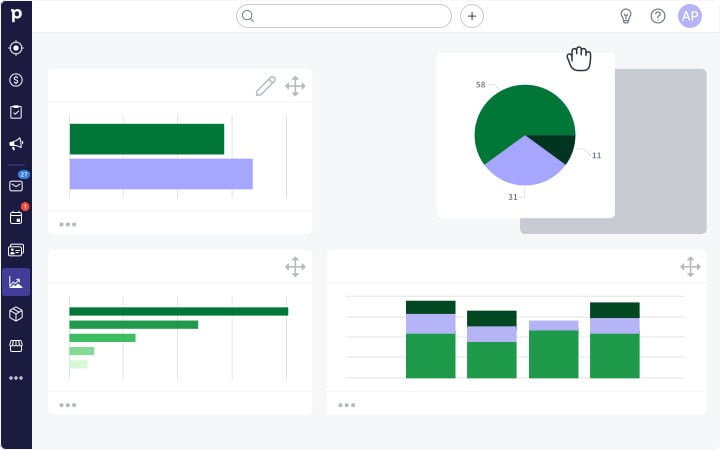
Image source: pipedrive.com
Who should think about using CRM?
In general, the larger the business, the more it appreciates benefits brought by CRM. If you have just a few long-term clients, you probably won’t be using the full potential of CRM. But when you sell to dozens or thousands of customers, need to target communication on the basis of various segments or purchase history, and have a sales team, CRM is an essential part of business life.
Try Pipedrive –
Pipedrive is one of the most popular CRM systems on the market. It’s easy to use, flexible, and designed to save time and help you close more deals.
Try Pipedrive for 14 days for free and see how CRM can help your business grow.